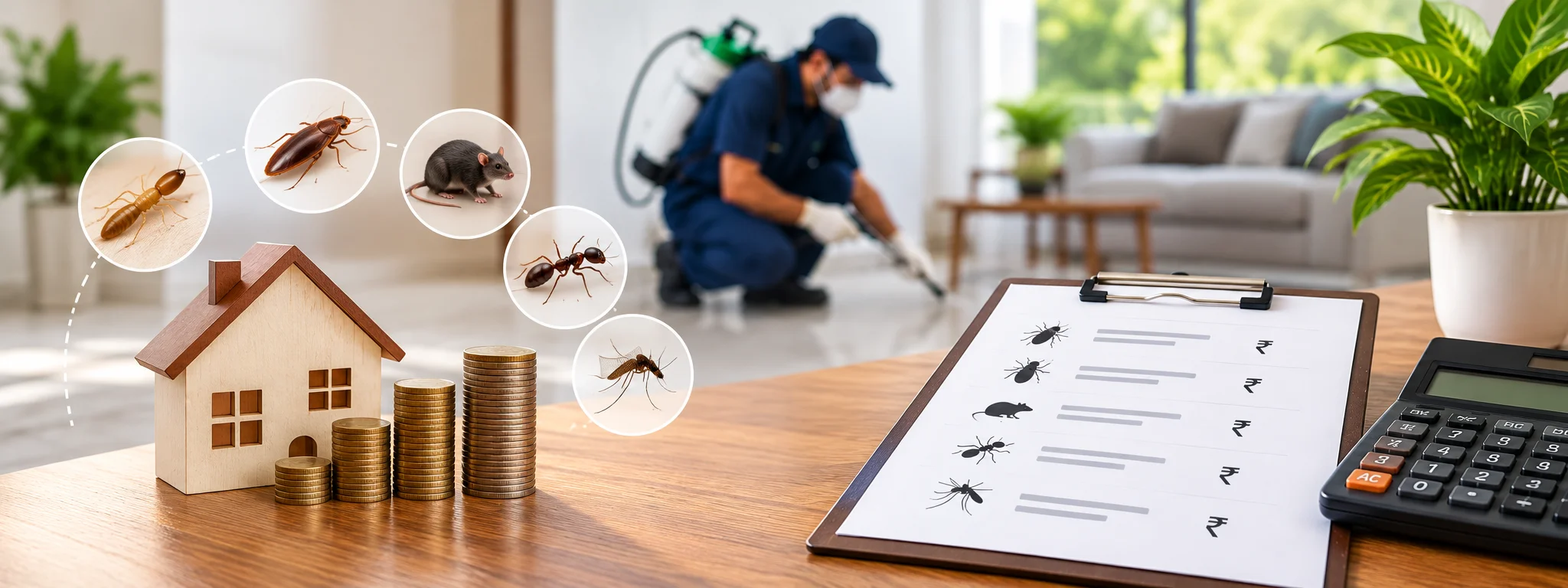
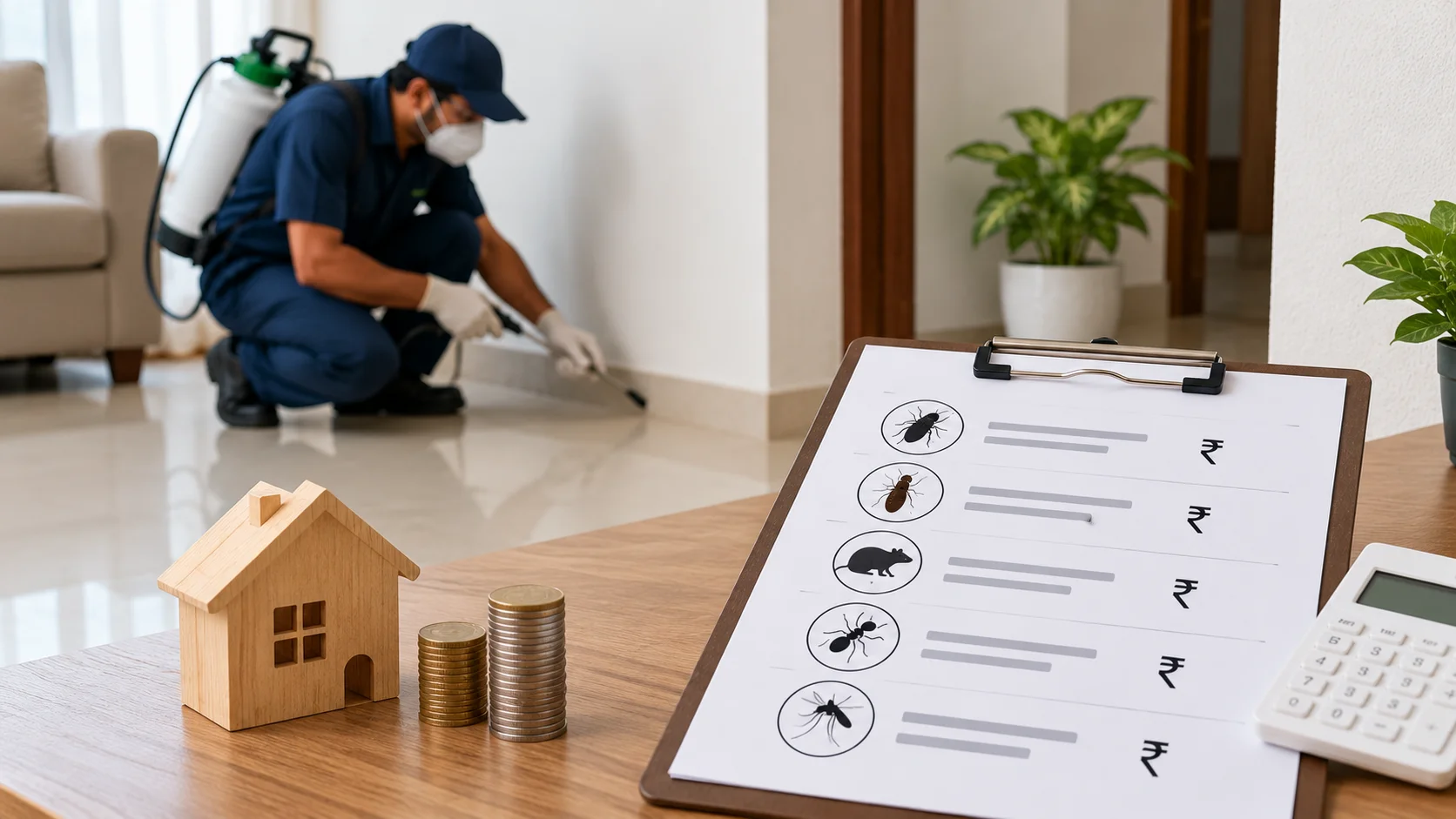
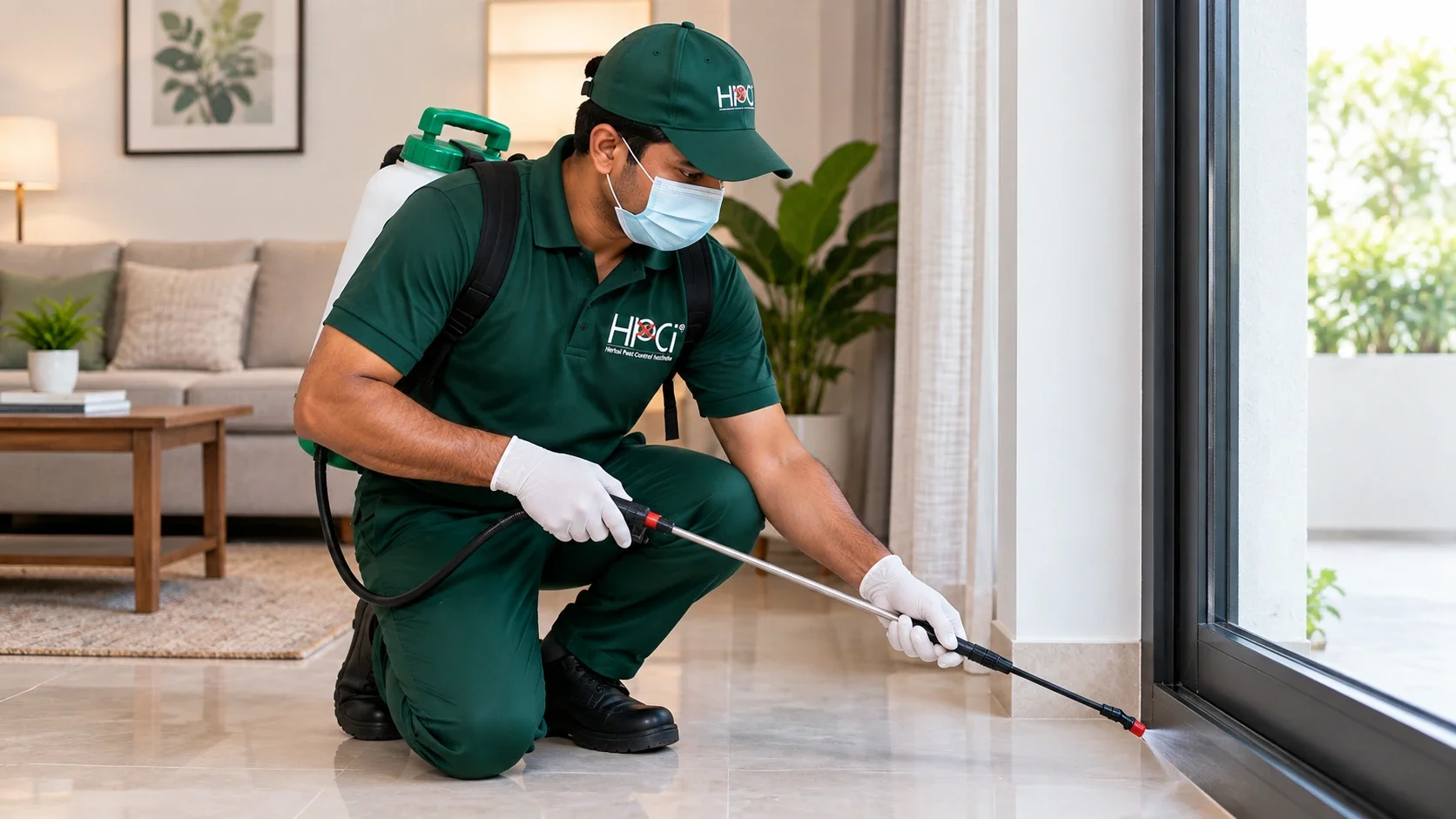
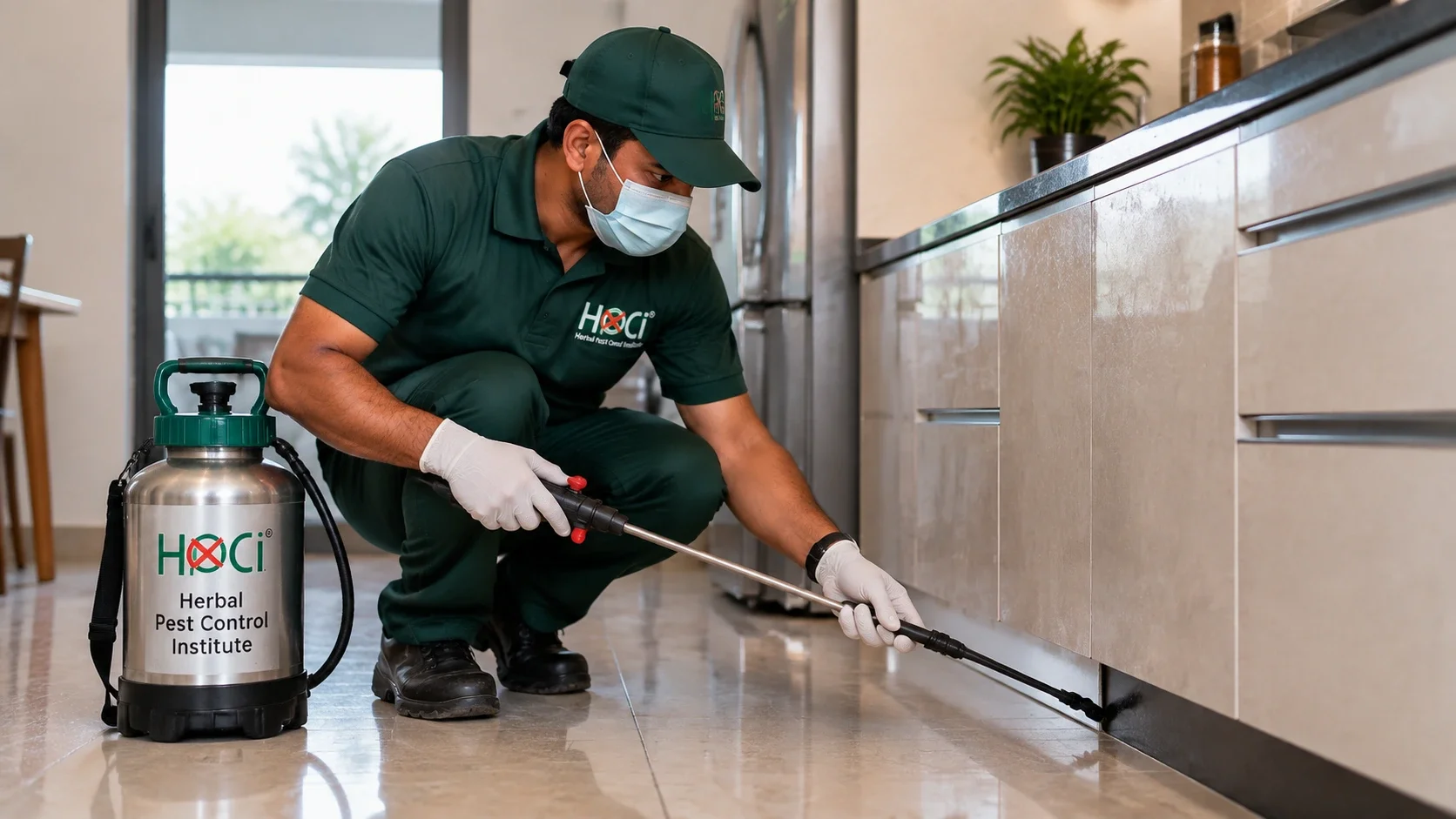
Wondering about a pest control price list? Learn what affects pest treatment costs in Nagpur, from pest type and property size to treatment method and follow-up needs.
Pest Control Price List: What Affects Pest Control Cost in Nagpur?
When people search for a pest control price list, they usually want one simple answer: How much will pest control cost?
The problem is that pest control does not have one fixed price for every property.
A small apartment with a minor cockroach problem requires a different approach from a large house with termites. A restaurant with recurring rodent activity may need a different pest-management plan from a bedroom affected by bed bugs.
The final cost can therefore depend on several practical factors, including the type of pest, property size, level of infestation, treatment method, number of areas involved and whether follow-up treatment is required.
At HPCI, we believe customers should understand what they are paying for, rather than choosing a pest-control service only because it offers the lowest price.
This guide explains the major factors that influence a pest control price list and what you should check before booking a treatment in Nagpur.
Is There a Fixed Pest Control Price List?
Not necessarily.
A pest control company may have standard packages or starting prices, but the actual treatment requirement can vary from one property to another.
For example, consider these two situations:
Property A:
A small apartment has occasional cockroach activity limited mainly to the kitchen.
Property B:
A larger house has cockroach activity in the kitchen, bathrooms, storage areas and utility spaces.
Both customers are looking for cockroach treatment, but the treatment requirement may not be identical.
The same applies to termites, rodents, mosquitoes and bed bugs.
This is why a professional assessment is useful before deciding on a treatment.
Instead of asking only:
“What is your price?”
it is better to ask:
“What treatment does my property actually need, what areas will be covered, and what is included in the quoted price?”
What Determines Pest Control Cost in Nagpur?
Several factors can influence the final cost.
1. Type of Pest
The first major factor is the pest itself.
Different pests behave differently and require different control approaches.
For example:
- Cockroaches often hide in kitchens, drains, cabinets and dark gaps.
- Termites may remain hidden inside wood, walls or soil around a structure.
- Bed bugs can hide around mattresses, bed frames, furniture and cracks.
- Rats may enter through structural gaps and move through storage or utility areas.
- Mosquito management can involve both indoor and outdoor conditions.
- Ant infestations may require attention to entry points and nesting areas.
Because the biology and hiding behaviour of each pest are different, the treatment process can also be different.
2. Size of the Property
Property size is another important factor in a pest control price list.
A compact apartment does not require the same amount of treatment as a large independent house, office, warehouse or commercial establishment.
The technician may need to consider:
- Number of rooms
- Kitchen and bathrooms
- Storage areas
- Balconies
- Utility areas
- Outdoor spaces
- Basement or parking areas
- Commercial sections
- Other pest-prone locations
Larger areas generally require more inspection and treatment coverage.
This is why giving an exact price without understanding the property can sometimes be misleading.
3. Severity of the Infestation
The level of infestation can also affect treatment requirements.
There is a significant difference between:
Early-stage pest activity
and
A well-established infestation.
For example, seeing occasional cockroaches may require a different treatment plan from finding them regularly in multiple rooms.
Similarly, a few signs of rodent activity are different from repeated sightings, droppings and damage across several areas.
A professional inspection helps determine how extensive the problem appears to be.
4. Number of Areas Requiring Treatment
Another factor is where the pests are active.
If pest activity is restricted to one area, treatment may be more focused.
If the infestation has spread across multiple areas, the technician may need to inspect and treat more locations.
For example, a cockroach problem may involve:
- Kitchen cabinets
- Sink area
- Bathroom
- Utility area
- Drainage points
- Storage spaces
A termite problem may involve:
- Door frames
- Window frames
- Cupboards
- Flooring
- Walls
- Foundation areas
The number and type of affected areas can therefore influence the treatment requirement.
5. Treatment Method
Not every pest problem should be treated in exactly the same way.
The appropriate treatment depends on factors such as:
- Pest species
- Infestation level
- Property type
- Treatment area
- Accessibility
- Existing conditions
- Customer requirements
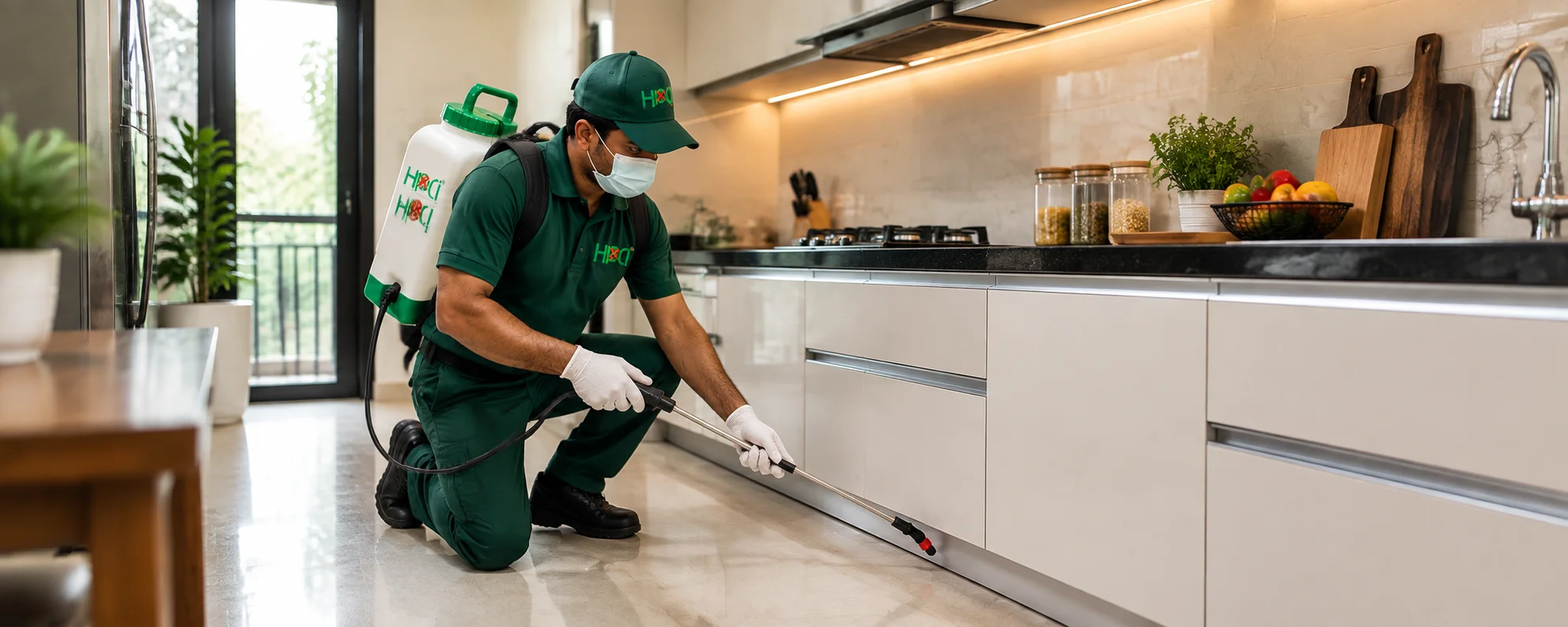
At HPCI, our service approach focuses on inspection and property-specific treatment planning rather than assuming that one method will work for every situation.
HPCI's current Nagpur service page lists herbal treatment options for cockroaches, termites, mosquitoes, rodents and bed bugs, among other pest-management services.
6. Residential or Commercial Property
The pest control cost can also vary depending on whether the property is residential or commercial.
Residential properties
These may include:
- Apartments
- Independent houses
- Villas
- Rental properties
The main focus is usually on living areas, kitchens, bedrooms, bathrooms, storage spaces and other parts of the home.
Commercial properties
These may include:
- Offices
- Restaurants
- Shops
- Warehouses
- Hotels
- Schools
- Hospitals
- Commercial buildings
Commercial properties can have different pest pressures because of factors such as food handling, storage, waste, customer movement, deliveries and larger floor areas.
Some businesses may also require scheduled inspections or recurring pest-management support.
7. One-Time Treatment vs Ongoing Pest Management
Another important point when comparing a pest control price list is whether you are looking for a one-time treatment or ongoing pest management.
A one-time service may be appropriate for certain situations.
However, properties with recurring pest activity may need continued monitoring and preventive measures.
For example, commercial properties with regular food storage or waste generation can face repeated pest pressure if the conditions attracting pests are not addressed.
In such cases, the conversation should not be only about the cost of one treatment.
It should also consider:
- Inspection
- Treatment frequency
- Monitoring
- Follow-up
- Prevention
- Property conditions
The cheapest one-time treatment is not always the lowest-cost solution in the long run if the underlying issue continues.
What Should Be Included in a Pest Control Price?
Before booking a service, ask what the quoted price actually covers.
A professional quotation should ideally make the service scope understandable.
Ask about:
Inspection
Will the property be inspected before treatment?
Treatment areas
Which rooms or areas are included?
Pest type
Is the quotation for one specific pest or multiple pests?
Treatment method
What type of treatment is being recommended?
Preparation
Does the customer need to move food, furniture or other items?
Safety instructions
What precautions should be followed before and after treatment?
Follow-up
Is another visit required or included if the problem continues?
Warranty or service terms
If the company provides a warranty or follow-up policy, ask exactly what it covers and for how long.
This prevents misunderstandings later.
How Much Does Pest Control Cost for a Home?
There is no single home pest control cost that applies to every property.
The final requirement may depend on:
- Home size
- Pest type
- Infestation level
- Number of rooms
- Number of affected areas
- Treatment method
- Accessibility
- Follow-up requirements
For this reason, homeowners should be careful with extremely low advertised prices.
A low starting price may not represent the complete treatment required for the property.
Instead, compare the scope of service along with the price.
How Much Does Commercial Pest Control Cost?
Commercial pest control can be more complex because the property may be larger and the pest risk may be ongoing.
For example, a restaurant may need attention around:
- Kitchen areas
- Food storage
- Waste areas
- Drains
- Delivery zones
- Storage rooms
A warehouse may have different risks involving:
- Packaging
- Stored materials
- Loading areas
- Waste zones
- Entry points
- Large storage spaces
Therefore, commercial pest control pricing should be evaluated according to the actual property and operating conditions.
Pest-Specific Factors That Can Affect Cost
Cockroach Control
Cockroach treatment cost can depend on:
- Size of the property
- Number of affected areas
- Severity of infestation
- Kitchen and utility conditions
- Hiding areas
- Follow-up requirements
Simply treating visible cockroaches may not address hidden activity.
Termite Treatment
Termite treatment cost can depend on:
- Property construction
- Type of termite activity
- Extent of damage
- Wooden structures involved
- Soil or foundation conditions
- Areas requiring treatment
- Pre-construction or post-construction requirements
Termite treatment should generally begin with inspection rather than selecting a treatment only from a price list.
Bed Bug Treatment
Bed bug treatment may require careful inspection because bed bugs can hide in areas that are not immediately visible.
Factors may include:
- Number of affected rooms
- Mattress and bed-frame condition
- Furniture
- Infestation level
- Areas requiring treatment
- Follow-up requirements
This is one reason why a very low advertised price should always be checked against the actual service scope.
Rat and Rodent Control
Rodent-control requirements can vary according to:
- Number of sightings
- Property size
- Entry points
- Food availability
- Storage conditions
- Waste areas
- Possible nesting locations
- Commercial or residential use
Effective rodent management should look beyond the rodent that is seen and consider how it is entering or moving through the property.
Mosquito Control
Mosquito control requirements may depend on:
- Property size
- Indoor and outdoor areas
- Standing-water conditions
- Drainage
- Surrounding environment
- Frequency of mosquito activity
Reducing breeding conditions is an important part of mosquito management.
Why the Cheapest Pest Control Service May Not Be the Best Choice
Price matters.
But pest control is one area where comparing only the lowest number can create problems.
Imagine paying for a cheap treatment that:
- Covers only part of the property
- Does not identify the source
- Uses an unsuitable treatment approach
- Does not explain prevention
- Requires repeated treatments because the underlying issue remains
The initial price may be lower, but the total cost can become higher over time.
Instead, compare:
Price + Treatment Scope + Expertise + Follow-Up + Prevention
That gives you a much better basis for choosing a service.
7 Questions to Ask Before Booking Pest Control
Before accepting a quote, ask these questions:
1. What pest are you treating?
Make sure the treatment is designed for the actual pest problem.
2. How will you assess the infestation?
Ask whether inspection is included.
3. Which areas are covered?
Get clarity about the treatment area.
4. What treatment method will be used?
The provider should be able to explain the approach in simple language.
5. Do I need to prepare my home?
Ask about food, furniture, pets, children and access requirements.
6. Is follow-up required?
Understand whether additional visits may be necessary.
7. What does the quoted price include?
This is perhaps the most important question.
A clear quotation helps you compare different pest-control providers fairly.
How HPCI Approaches Pest Control in Nagpur
At HPCI, we believe pest management should begin with understanding the actual problem.
Our team works with residential and commercial properties and provides pest-management solutions for problems including cockroaches, termites, mosquitoes, rodents and bed bugs. HPCI's Nagpur service page currently lists these dedicated treatment categories.
HPCI states that it has been operating since 2000 and has served more than 25,000 customers. The company also describes its approach around herbal, plant-based pest-management formulations and trained technicians.
For customers asking about price, the more useful starting point is therefore to understand:
What pest are you dealing with?
Where is it active?
How large is the property?
How serious is the problem?
What treatment is appropriate?
Once these factors are understood, it becomes easier to discuss the right service instead of simply choosing a number from a generic list.
How to Reduce Your Long-Term Pest Control Cost
Professional treatment is only one part of pest management.
You can also reduce recurring pest problems by improving property conditions.
Keep food properly stored
Open food can attract cockroaches, ants and rodents.
Fix water leaks
Moisture can create favourable conditions for several pests.
Keep waste areas clean
Dispose of waste regularly and keep bins properly covered.
Seal obvious entry points
Check gaps around doors, windows, pipes and other building openings.
Avoid unnecessary clutter
Cardboard, unused materials and clutter can provide hiding places.
Inspect problem areas regularly
Early detection can make pest management easier.
Do not ignore repeated sightings
Recurring pest activity deserves investigation rather than repeated temporary fixes.
Frequently Asked Questions About Pest Control Price List
What is included in a pest control price list?
A price list may show starting prices or service packages, but the actual treatment requirement can vary according to pest type, property size, infestation level, treatment method and service scope.
Why does pest control pricing vary from one property to another?
Every property has different conditions. The number of rooms, pest activity, affected areas, treatment requirements and follow-up needs can all influence the final cost.
Is a cheaper pest control service always better?
No. Price should be compared with the treatment scope, experience, inspection process, safety instructions and follow-up support.
Can I get pest control without an inspection?
Some basic services may have standard packages, but an inspection can be useful when the infestation is unclear, recurring or widespread.
Does property size affect pest control cost?
Yes. Larger properties may require greater treatment coverage and more time, depending on the pest problem.
Does the type of pest affect the price?
Yes. Cockroaches, termites, bed bugs, rodents and mosquitoes have different behaviours and treatment requirements.
Is pest control for homes different from commercial pest control?
It can be. Commercial properties often have larger areas, different operating conditions and potentially recurring pest pressures.
Should I choose pest control based only on price?
No. Compare the complete service, including what areas are covered, treatment approach, preparation requirements and follow-up terms.
Final Thoughts
Searching for a pest control price list is a sensible first step when you are trying to understand your options.
But the number alone does not tell you whether a service is right for your property.
The better approach is to understand what is causing the pest problem, how extensive it is, which areas need treatment and what the quoted service actually includes.
Whether you are dealing with cockroaches in a kitchen, termites around wooden structures, rodents in storage areas, bed bugs in a bedroom or mosquitoes around your property, the treatment requirement can vary.
At HPCI, our approach is to understand the pest problem first and then recommend a suitable pest-management approach for the property.
If you are looking for pest control in Nagpur and want to understand the appropriate treatment for your property, contact HPCI for an assessment and discuss the service requirements before booking.
The right pest control decision is not simply about finding the lowest price. It is about getting the right treatment for the actual problem.